
I use a tripod whenever I can to make sure my camera is as steady as can be. Most of the time I use a big tripod made by Manfrotto that has always been my number one go-to tripod. It’s a tripod I’ve owned for close to 10 years now and it show no signs of stopping any time soon. As much as I love my big Manfrotto it is a bit heavy and a little large for when I’m traveling or out for a fun photo walk. In those situations I prefer a smaller and lighter solution for keeping my camera steady. Recently I added a new travel-sized tripod to my gear collection and for this blog post I’ll be sharing some initial thoughts about it.
Small Tripods
Using a tripod is a great way to keep your camera steady and that means sharper shots. The rule of thumb is that when a tripod gets bigger and denser it’s going to be a sturdier mount. Unfortunately, a big heavy tripod is the last thing you want when you’re going on vacation, taking a long hike or going on a photo-walk. A great solution for these situations is to use a smaller “travel sized” tripod.
I’ve owned plenty of super portable tripods over the years and even though they weren’t rock solid they did help keep to my camera steady. When I’m shooting fireworks, landscapes (especially with water in the shot), night scenes and HDR bracketed sets I want my camera on a tripod. The reason I use a tripod is because the shutter speed for shots like those get super long. If your shutter speed gets to be a second or longer you really need to use something to keep your camera steady.
My newest super portable tripod is made by 3Pod and it’s available exclusively from Adorama. I ordered the 3POD to replace my travel sized Manfrotto tripod that was just not getting the job done for me. The size of the small Manfrotto was fine but the ball head couldn’t deal with the weight of my DSLRs.
the 3Pod Tripod
I decided on the 3Pod P5CRH tripod when I saw the specifications. It’s super small when it’s folded up and it’s super light. It extends tall enough to be used in almost any situation (close to 55 inches maximum) and it’s rated to handle up to 22 pounds of gear. It comes with a ball head, a padded case and some allen wrenches to keep things nice and tight. Here’s a look at my new P5CRH fresh out of the box when it arrived:

I was immediately impressed with how small and light the tripod was. The overall length of the nicely padded bag was just under 15 inches. I was eager to take a look at what was inside.
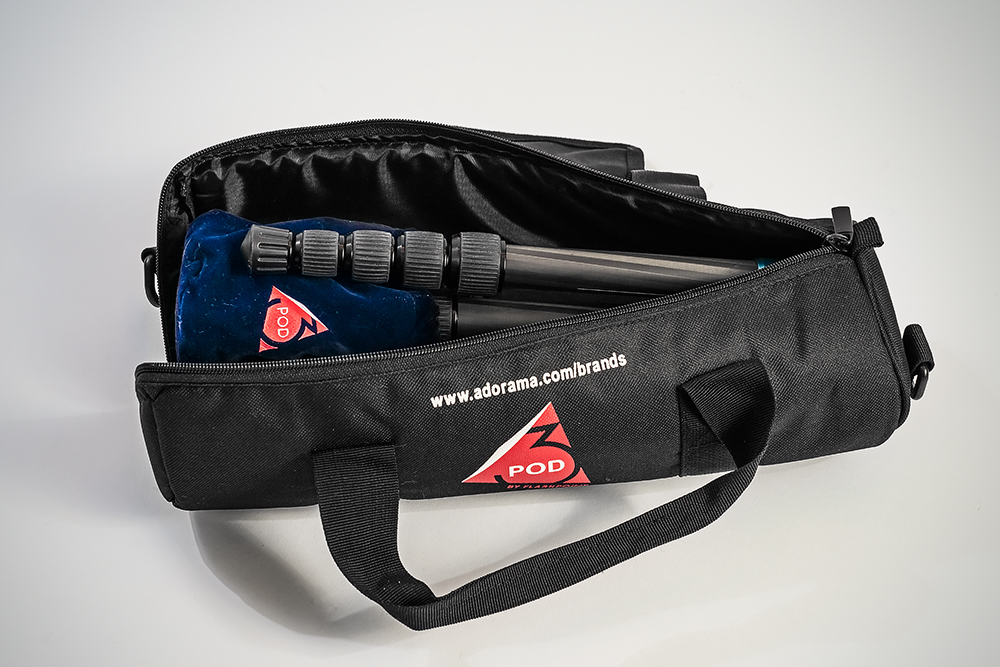
Inside the bag was the tripod and a shoulder strap for the carry case. A really nice touch was how the ball head was protected with a velvety drawstring bag. In addition to the tripod/ballhead there was a small zippered pocket with allen wrenches and a folded owners manual (it wasn’t the best manual I’ve seen but it was better than nothing). Here’s a look at everything (except the owners manual) that was in the bag:

It’s really a pretty complete kit when you consider the $150 price tag.
Tripod Features
When I bought my P5CRH I was looking for something small and light but still sturdy enough to handle my full-frame camera with f2.8 lenses. What caught my eye was the total folded length of under 15 inches and weight of just over 2.5 pounds. The 3Pod tripod accomplishes these specifications by using five section legs made of carbon fibre and a two section extending center column. That’s considerably smaller and lighter than my main tripod (my biggest tripod is over 30 inches folded and weighs over 7 pounds). The legs are designed to fold back completely to reduce the overall size of the tripod down to under 15 inches:

With the legs folded into the normal position (which I consider a bit faster for setting up) the length grows to just over 18.5″. This is still shorter than my older travel tripod by about half an inch and almost half the size of my big Manfrotto (which is over 30 inches long when it’s folded up). Here’s a look at the 3POD tripod with the legs folded normally:

Sturdiness was also important to me and the carbon fibre legs are surprisingly solid considering how small they get (the diameter of the lowest sections is about 3/8″) . Unfortunately the point where each section meets the next larger section is a point of weakness that adds a bit of flex to an otherwise solid set of legs.
Another important aspect of this tripod system is the 3POD K3 ball head that’s included with this system. The K3 features a scratch-resistant carbon body that, according to Adorama, “employs advanced CNC forging technology and a hard protective finish for a wear-free appearance and features enhanced hydraulic damping and 360º of smooth, jitter-free rotation“. I found the head to be rock solid even when holding my full-frame DSLR (with a battery grip) and my 70-200mm f2.8 lens. Not bad at all.
Another great feature is how each leg can choose one of three different angles for use in different situations (wider angles will reduce the overall height of the tripod). I’ve been out shooting on some very uneven rocks a number of times and this feature comes in super handy. Here’s a look at the tripod with the legs set in a wider stance (this is the middle position of the three):

The P5CRH also features spiked feet under the removable non-skid rubber caps. These can be handy if you’re out shooting someplace, like on a beach, where you want to dig in and really have a steady base. I also found myself really liking the half turn leg section locks which make it quick and easy to get the legs extended and retracted (I’m used to flip lever style leg extension locks).
The last cool feature I’ll mention is the spring loaded hook on the bottom of the center column. Because a heavier tripod will always be a more solid camera mount it’s sometimes beneficial to add extra weight to your system. If you have a sandbag you can add a few pounds of additional stabilization quickly and easily (and if you don’t have a sandbag you can always hang a camera bag or whatever you have handy on your tripod). Here’s a look at my tripod with a 5 pound sandbag attached:
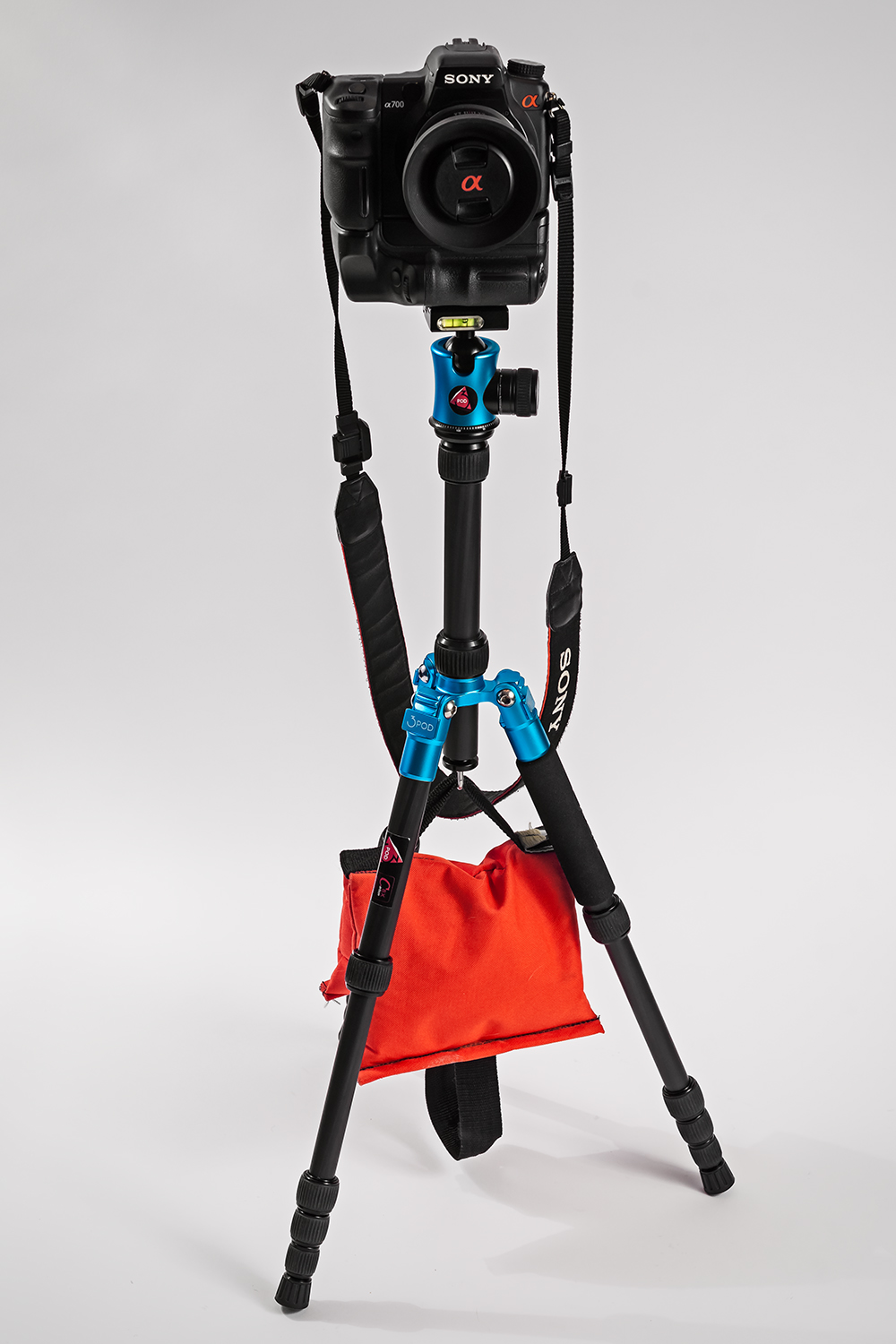
When I’m hiking I carry an empty sandbag in my pack that I can fill at a location and empty to keep the amount of weight I’m carrying low.
My Final Thoughts
So far I’m really digging my new travel tripod. It’s small enough to fit in my backpack or my shoulder bag and light enough for me to not consider leaving it behind to keep the total weight of my bag low. It’s not the sturdiest tripod I own but it’s not supposed to be. Let there be no doubt – if I’m on an assignment or out shooting serious landscape shots my big Manfrotto will be the tripod I’ll be mounting my camera to. The rest of the time I’ll be using the much smaller and lighter 3Pod tripod.
Is it perfect? Absolutely not. It does have a bit of flex when it’s fully extended but I use a wired cable release (or the 10 second timer) for triggering my camera so it’s not a big deal to me. If this will be your only tripod then you should seriously look into ways to trigger your camera remotely. Another option is keeping the center columns down (retracted) to reduce bounce caused by pressing the shutter release. In fact – this tripod is sturdiest when you keep it’s overall height as low as possible. Setting it up on a raised surface (like a table) is a good way to make the tripod sturdier.
I’d also like to see two of the foam leg covers instead of just one. Adorama has optional foam wraps (under their “Flashpoint” brand) available on their website for $20 a set and when I figure out which size is the right one for this tripod I’ll add an update. One last thing I wish they had was a L-bracket as an option. I’ve ordered a universal L-bracket that I’ll be testing out but I really wish 3Pod had something that was guaranteed to work with their quick release plates.
For night shots, long exposure landscape shots and shooting bracketed sets (for creating HDR images) it’s incredibly important to use a tripod. Even though it’s not as solid as my $400 Manfrotto system it’s more than steady enough to get the job done when I don’t want to bring the big tripod along. It’s a dream-come-true for vacations and photo walks and I know mine will be getting some serious usage in the months to come. I’ll be sure to write a follow-up blog when the 3Pod P5CRH gets some usage out in the wild. I’m sure I’ll learn more about what I like and don’t like about using such a small tripod in the real world.
FULL DISCLOSURE – The tripod shown in this review is my personal tripod that I paid full price for (in other words, it isn’t a review sample). It’s available from Adorama for under $150.00 (including free shipping) and I’ve even seen some special sale prices at the time I wrote this blog post. If you’re interested in picking one up you can visit the Adorama website here.
You can support my blog by using the sponsor links below
// ]]>
